On this page
CNC machining cost is determined by part design, material behavior, machine time, and production scale.
Small design or material decisions can increase machining cost significantly without improving functional performance.
1. Material Type and Machinability
Material selection directly affects cutting speed, tool wear, and cycle time.
Cost-impacting material factors:
-
Machinability rating
-
Cutting forces and heat generation
-
Tool wear rate
-
Material availability and form (plate, bar, extrusion)
Technical implications:
-
Aluminium alloys machine faster with lower tool wear.
-
Stainless steel increases cycle time and tool consumption.
-
Hardened steels require slower feeds and specialized tooling.
Key point:
Poor machinability increases machine time and tooling cost more than raw material price.
2. Part Geometry and Design Complexity
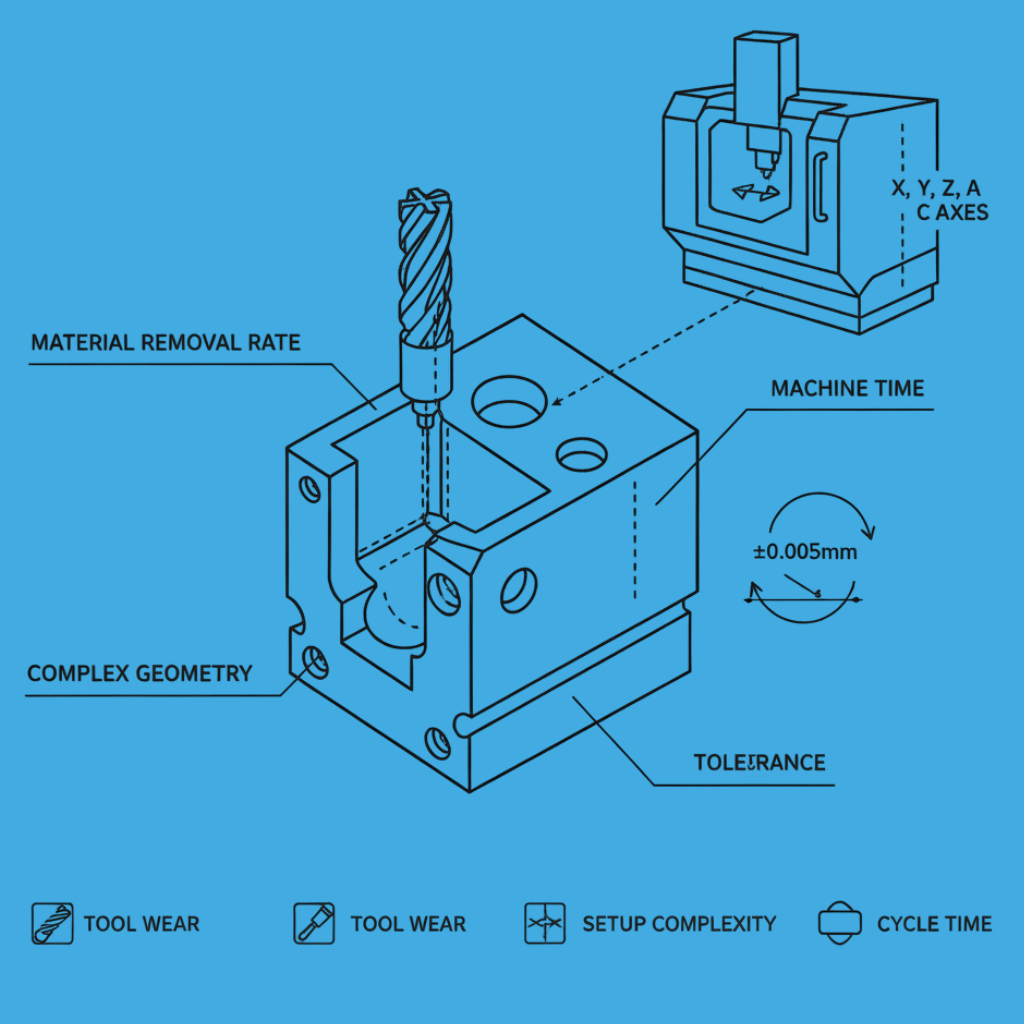
Geometry determines the number of operations and tool paths required.
Design elements affecting cost:
-
Deep pockets and narrow slots
-
Thin walls and tight corner radii
-
Undercuts requiring special tooling
-
Multiple setup orientations
Engineering impact:
-
Complex geometry increases setup time and machining passes.
-
Tight internal radii may require smaller tools, increasing cycle time.
Key point:
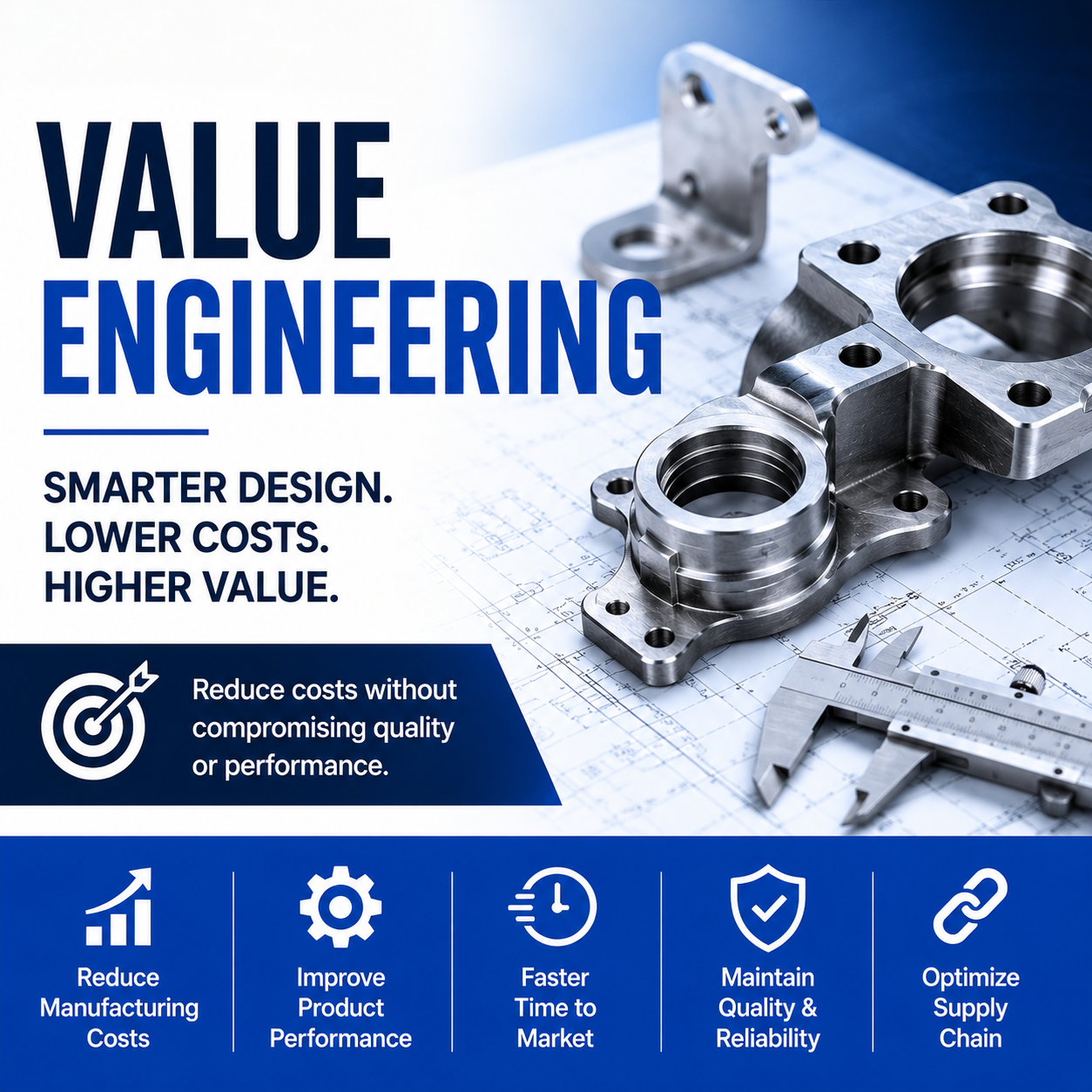
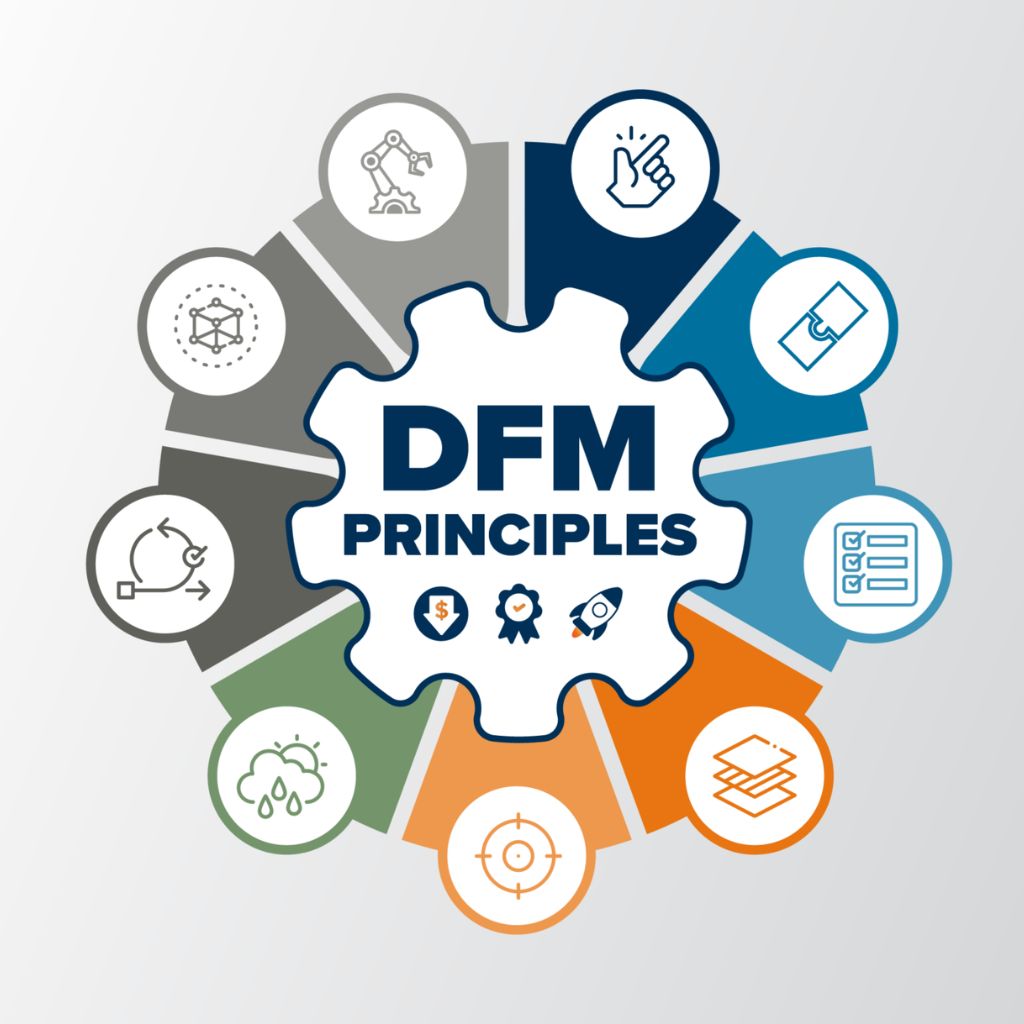
Design for Manufacturability (DFM) directly reduces machining cost.
3. Tolerances and Surface Finish
Tighter tolerances and finer finishes require additional machining time and inspection.
Cost drivers:
-
Tight dimensional tolerances
-
Flatness and perpendicularity requirements
-
Surface finish specifications (Ra values)
-
Secondary finishing operations
Practical impact:
-
Holding unnecessary tight tolerances increases inspection and rework risk.
-
Fine surface finishes require slower cutting speeds and extra passes.
Key point:
Specify tolerances and finishes only where functionally required.
4. Machine Type and Axis Configuration
Machine selection affects setup efficiency and cycle time.
Cost-related considerations:
-
3-axis vs 5-axis machining
-
Machine availability and hourly rates
-
Fixturing complexity
-
Tool change frequency
Technical impact:
-
5-axis machining reduces setups but has higher hourly rates.
-
Multiple 3-axis setups increase handling and alignment time.
Key point:
Fewer setups often outweigh higher machine hourly costs.
5. Production Volume and Batch Size
Cost per part decreases as volume increases, but not linearly.
Volume-related cost factors:
-
Setup time amortization
-
Tooling life utilization
-
Fixture optimization
-
Machine scheduling efficiency
Practical considerations:
-
Low-volume parts carry higher setup cost per unit.
-
Medium volumes benefit from dedicated fixturing.
-
High volumes may justify process optimization or alternate methods.
Key point:
Machining strategy should align with production volume.
6. Tooling, Fixtures, and Programming
Non-recurring engineering costs are often underestimated.
Cost contributors:
-
Custom tooling requirements
-
Fixture design and build
-
CAM programming complexity
-
Tool validation and prove-out
Engineering impact:
-
Complex parts increase CAM programming time.
-
Custom fixtures improve repeatability but increase upfront cost.
Key point:
Upfront engineering effort improves cost stability at scale.
7. Secondary Operations and Post-Processing
Additional processes add direct and indirect costs.
Examples:
-
Deburring and edge finishing
-
Heat treatment
-
Anodizing or plating
-
Part marking and inspection
Key point:
Every secondary operation adds cost, lead time, and handling risk.
Summary
CNC machining cost is influenced by:
-
Material machinability
-
Part geometry and tolerances
-
Machine configuration and setups
-
Production volume and tooling strategy
-
Secondary operations
Cost optimization comes from engineering alignment, not aggressive pricing.
How We Help
At Gate, we help OEMs and product teams reduce CNC machining cost by reviewing part design, material selection, tolerances, and production volumes before manufacturing begins.
Our engineering-led approach ensures predictable cost, stable quality, and scalable production from prototype to series manufacturing.
If you need support optimizing CNC machining cost without compromising performance or delivery, contact our engineering team.