On this page
Saudi Arabia plans to award 14 gigawatts (GW) of renewable energy projects in 2026 under its National Renewable Energy Program (NREP), primarily through solar and wind tenders managed by the Saudi Power Procurement Company (SPPC). This expansion supports Vision 2030 goals and will significantly increase demand for renewable energy infrastructure, components, and localized manufacturing supply chains.
A decade ago, Saudi Arabia’s power grid was almost entirely dependent on oil and natural gas.
Today, the country is racing in a very different direction.
Large utility-scale solar farms are rising in the desert. Wind turbines are appearing in previously untouched regions. And global EPCs, developers, and OEMs are competing for some of the world’s largest renewable energy tenders.
The latest signal of this shift is bold:
Saudi Arabia plans to award 14 GW of renewable energy projects in 2026.
For context, that’s equivalent to building 14 nuclear-scale power plants worth of renewable capacity in a single procurement cycle.
But beyond energy headlines, this announcement reveals something even more important:
A massive industrial supply chain opportunity.
What Is Saudi Arabia’s 14 GW Renewable Energy Plan?
Saudi Arabia’s Ministry of Energy is expanding renewable generation through the National Renewable Energy Program (NREP).
Under this initiative:
-
Around 14 GW of renewable capacity will be awarded in 2026
-
Projects will mainly include solar PV and wind power
-
The tenders will be managed by the Saudi Power Procurement Company (SPPC)
-
They are expected to fall under Round 7 of renewable auctions.
The strategy supports Saudi Arabia’s broader goals to:
-
diversify energy sources
-
reduce domestic oil consumption
-
increase clean electricity generation
-
build local industrial capabilities
This is a key pillar of Vision 2030.
Why Saudi Arabia Is Scaling Renewable Energy So Fast
Saudi Arabia has three powerful incentives driving this transition.
1. Energy diversification
Historically, Saudi Arabia burned large quantities of crude oil to generate electricity.
Renewables allow the Kingdom to:
-
free oil for export
-
stabilize energy costs
-
reduce carbon emissions
2. Falling solar costs
The Middle East now hosts some of the lowest solar tariffs in the world, thanks to high irradiation levels and competitive auctions.
Some solar projects in Saudi Arabia have reached prices close to:
$0.012–$0.013 per kWh
This makes solar one of the cheapest electricity sources globally.
3. Vision 2030 targets
Saudi Arabia aims to deploy massive renewable capacity over the coming decade.
Key long-term targets include:
| Target | Capacity |
|---|---|
| Solar power | ~40 GW |
| Wind power | ~16 GW |
| Total renewable energy | ~58.7 GW by 2030 |
These targets require a continuous pipeline of multi-GW projects.
How Renewable Energy Projects Translate Into Industrial Demand
Large renewable projects are often described in terms of gigawatts.
But for manufacturers and suppliers, the real story is components.
A single 1 GW solar project requires roughly:
-
2–3 million solar panels
-
20,000–30,000 tons of steel
-
thousands of aluminum structures
-
kilometers of cable trays and electrical hardware
-
inverter stations
-
mounting structures and trackers
-
switchgear and control systems
Now scale that to 14 GW.
The supply chain implications are enormous.
Industrial components involved
Solar projects require:
-
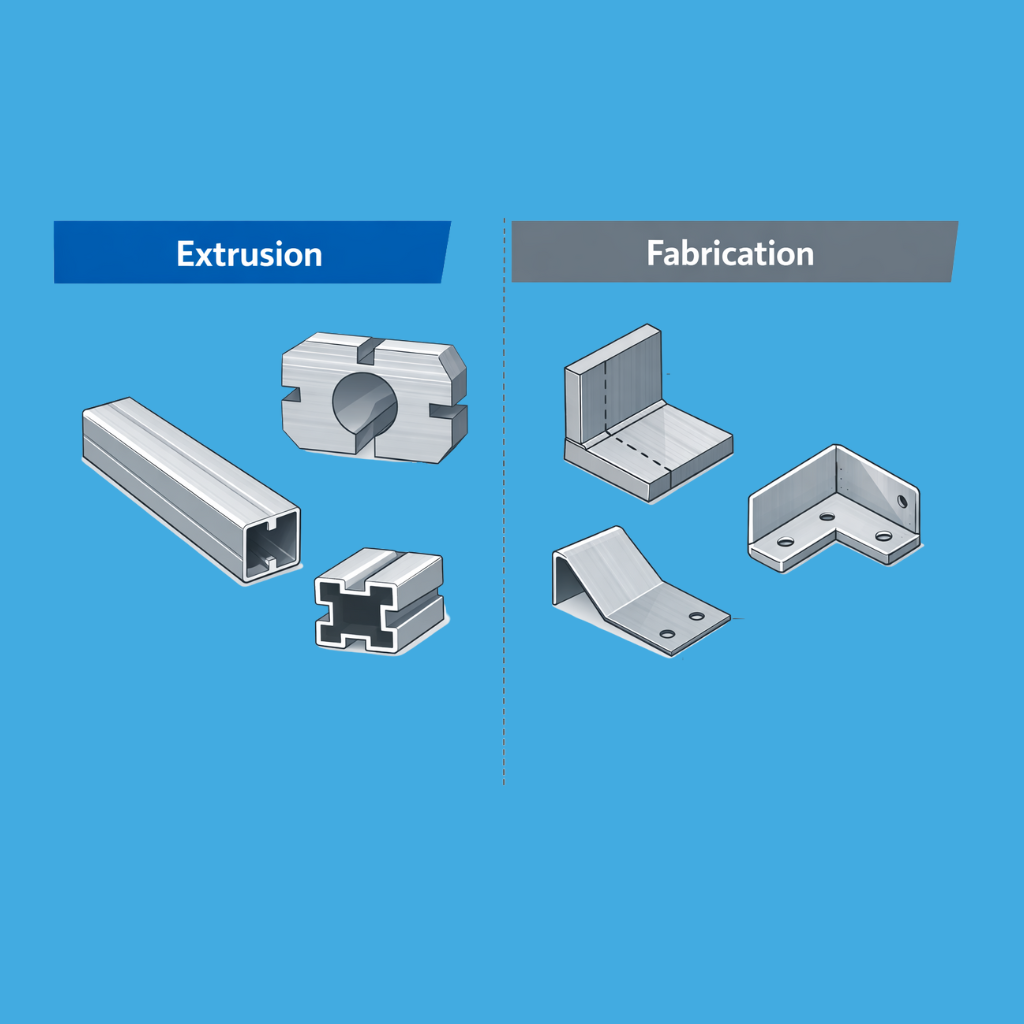
module mounting structures
-
aluminum extrusions
-
steel racking
-
fasteners and brackets
-
cable management systems
-
inverter housings
-
electrical enclosures
Wind projects require:
-
turbine tower sections
-
structural components
-
nacelle housings
-
electrical cabinets
-
transformer structures
Every gigawatt deployed creates thousands of manufacturing jobs across the supply chain.
The Local Content Factor: Why Manufacturing Matters
One of the most important aspects of Saudi renewable projects is local content requirements.
Recent renewable programs have pushed local content thresholds above 35% in many project components.
This means developers must increasingly source from:
-
Saudi-based manufacturers
-
regional suppliers
-
localized production partners
For EPCs and OEMs entering Saudi renewable projects, the challenge is not only engineering the project — but building a localized supply chain that meets regulatory requirements.
This is where contract manufacturing partners and local engineering suppliers become critical.
Practical Example: What a 500 MW Solar Plant Needs
Let’s take a simplified example.
A 500 MW solar project — common in Saudi tenders — typically requires:
| Component | Approx Quantity |
|---|---|
| Solar modules | ~1.2 million panels |
| Mounting structures | ~12,000 tons |
| Aluminum rails | ~4,000 tons |
| Cable trays | hundreds of kilometers |
| Inverter stations | 100+ |
| Structural fasteners | millions |
If Saudi Arabia awards 14 GW, this could mean:
-
30+ million solar panels
-
hundreds of thousands of tons of structural material
-
thousands of electrical assemblies
This is why renewable energy is no longer just an energy transition story.
It is a manufacturing transformation.
Why Supply Chains Are the Real Bottleneck
Many renewable developers assume the main challenge is project financing.
In reality, the biggest constraints often come from:
1. Structural component manufacturing
Solar racking and mounting structures require precision metal fabrication.
2. Electrical assemblies
Switchgear, inverter housings, and electrical infrastructure must meet strict standards.
3. Logistics and project timelines
Utility-scale projects have tight EPC schedules.
A delayed shipment can delay grid commissioning.
4. Local compliance
Meeting Saudi local content and certification requirements can be complex.
This is why renewable developers increasingly rely on regional manufacturing ecosystems.
Key Takeaways
-
Saudi Arabia plans to award 14 GW of renewable energy projects in 2026.
-
The projects will be procured under the National Renewable Energy Program (NREP).
-
Solar PV and wind power will dominate the upcoming tenders.
-
Large renewable projects create massive demand for industrial components and manufacturing supply chains.
-
Local content policies are accelerating the need for regional manufacturing partnerships.
-
Renewable energy expansion is becoming one of the largest industrial opportunities in the Middle East.
FAQ
Why is Saudi Arabia investing heavily in renewable energy?
Saudi Arabia wants to diversify its energy mix, reduce oil consumption for domestic electricity, and meet sustainability goals under Vision 2030.
What is the National Renewable Energy Program (NREP)?
NREP is Saudi Arabia’s national framework for developing solar and wind projects through competitive tenders managed by the Saudi Power Procurement Company.
How large is 14 GW of renewable energy?
14 GW is enough electricity to power several million homes and represents one of the largest renewable procurement rounds globally.
Who participates in these renewable energy projects?
Participants typically include:
-
Global EPC contractors.
-
Renewable energy developers.
-
Turbine and Solar OEMs.
-
Infrastructure manufacturers.
-
Engineering and construction firms.
Why is local manufacturing important for Saudi renewable projects?
Saudi Arabia has introduced local content requirements, encouraging developers to source components locally and strengthen domestic industrial capabilities.
Conclusion
Saudi Arabia’s 14 GW renewable procurement in 2026 is not just another energy announcement.
It signals something bigger.
The Kingdom is rapidly building one of the world’s largest renewable energy markets — and behind every solar farm or wind turbine is an extensive industrial ecosystem.
Steel structures. Aluminum extrusions. Electrical systems. Precision components.
In many ways, the real story of the energy transition isn’t only about power generation.
It’s about manufacturing capacity, supply chains, and engineering infrastructure that make these projects possible.
And as Saudi Arabia accelerates toward its renewable targets, the companies that understand — and support — this industrial backbone will quietly power the transition.